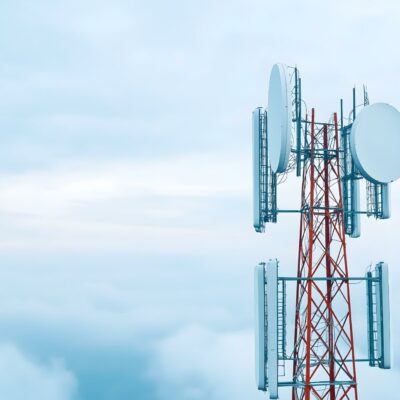




The wireless communications space continues to be one of the most litigation-intensive technology sectors in the United States. With nearly every modern device relying on cellular connectivity—and with carriers operating sprawling patent portfolios tied to 3G, 4G, LTE, 5G, and emerging standards—the ecosystem remains fertile ground for patent disputes, competitor suits, and high-volume NPE assertion activity. Using aggregated filing data from the wireless dataset, this Part One installment provides a high-level but data-driven view of where litigation is concentrated, which parties are most active, and how the structure of the wireless market shapes the legal landscape.
A High-Intensity Sector With Nearly 10,000 Total Cases
The wireless group encompasses 9,922 total cases, underscoring a level of legal activity that rivals more volatile technology areas like semiconductors or software security. That volume includes:
- District Court Litigation – the core venue for wireless disputes and historically the most active forum;
- PTAB Petitions – often filed strategically by defendants to invalidate asserted patents or narrow exposure;
- ITC Investigations – fewer in number but typically involving higher commercial stakes due to potential exclusion orders;
- Federal Circuit Appeals – which frequently arise from PTAB outcomes in wireless matters and shape claim construction for industry-critical technologies.
The sheer size of this litigation footprint reflects both the ubiquity of wireless technology and the interconnected nature of its supply chain. From modem chipsets to backend networking equipment, multiple layers of innovation stack atop each other, making patent assertions more likely and more complex.
Major Carriers Dominate the Litigation Landscape
The dataset confirms what nearly every wireless practitioner already knows: the carriers sit at the center of the litigation ecosystem. The top U.S. carriers appear prominently in the case tallies:
- Verizon and its related entities appear in 2,248 district court actions,
- AT&T and AT&T Mobility collectively make up another substantial share, and
- T-Mobile, including its Sprint-legacy corporate group, appears in 1,403 district court cases.
These figures illustrate two important dynamics:
- Market size drives litigation exposure. Carriers operate nationwide networks that rely on thousands of patented technologies. Their customer bases exceed 100 million users each, placing them squarely in the crosshairs of both competitors and patent-assertion entities.
- Standard-essential patents (SEPs) continue to play an outsized role. Because carriers’ network equipment must comply with standardized specifications (3GPP, LTE, 5G NR), disputes often involve SEPs—where FRAND obligations and licensing negotiations add another layer of complexity.
It is no surprise that the largest carriers, which sit at the upstream endpoint of virtually every wireless transaction, remain the most frequently named defendants in the sector.
Device Manufacturers and Component Suppliers Are Close Behind
Although the carriers hold the highest volume of cases, they are far from the only repeat players. The broader “Top 20 Case Parties” include:
- Handset manufacturers
- Modem and radio chipset developers
- Infrastructure and base station companies
- IoT device manufacturers
- Cable/MSO operators are increasingly active in mobile markets
This distribution reflects a structural reality: wireless is a vertically integrated ecosystem, and patent assertions often cascade across device makers, network operators, and component suppliers simultaneously.
For example, a single wireless patent may apply to:
- handset firmware,
- radio front-end hardware,
- power-amplifier design,
- base–station handoff procedures, or
- core-network authentication protocols.
As a result, plaintiffs often file multi-defendant campaigns that sweep in product-level and network-level companies together.
District Courts Remain the Center of Gravity
The dataset’s case-type counts show that district court litigation remains the dominant forum for wireless disputes. PTAB filings serve as an important defensive tool—especially in SEP-heavy cases—but the core strategic battles still happen in district courts, where:
- damages exposure is highest,
- injunctive relief is possible, and
- broader discovery allows deeper exploration of implementation details inside network equipment and devices.
Carriers and manufacturers routinely juggle cases in multiple districts simultaneously, with hotspots including:
- Texas (WDTX, EDTX) – favored by NPEs for venue and perceived speed;
- Delaware – deeply experienced with high-tech patent matters;
- California – home to many wireless innovators and Silicon Valley device makers;
- Virginia and Illinois – important in cases involving government contracts or large enterprise deployments.
The prevalence of district litigation suggests that, despite the rise of PTAB practice, plaintiffs still see district courts as the best route to material financial outcomes.
Why Wireless LitigationVolume Is So High: The Technical Overlap Problem
One of the defining features of wireless litigation is the overlapping nature of wireless technologies. Innovations such as:
- channel coding,
- MIMO antenna systems,
- modulation techniques,
- scheduling algorithms, and
- handover procedures
are implemented across nearly every device and every network. When a patent touches a foundational layer of the wireless stack, its potential infringement surface becomes extremely broad.
That technical overlap produces three predictable effects:
- Large multi-defendant campaigns involving dozens of carriers, OEMs, and component suppliers.
- High rates of parallel PTAB filings—a natural byproduct of defendants seeking to narrow industry-wide exposure.
- Complex claim-construction disputes that often require deep dives into engineering documentation and standard-setting history.
The dataset’s case volume and distribution are consistent with these systemic drivers.
The litigation profile reflected in the data set is consistent with these dynamics: broad case volumes, recurring high-frequency defendants, and a procedural mix that illustrates how parties strategically leverage the U.S. patent system’s multiple forums.